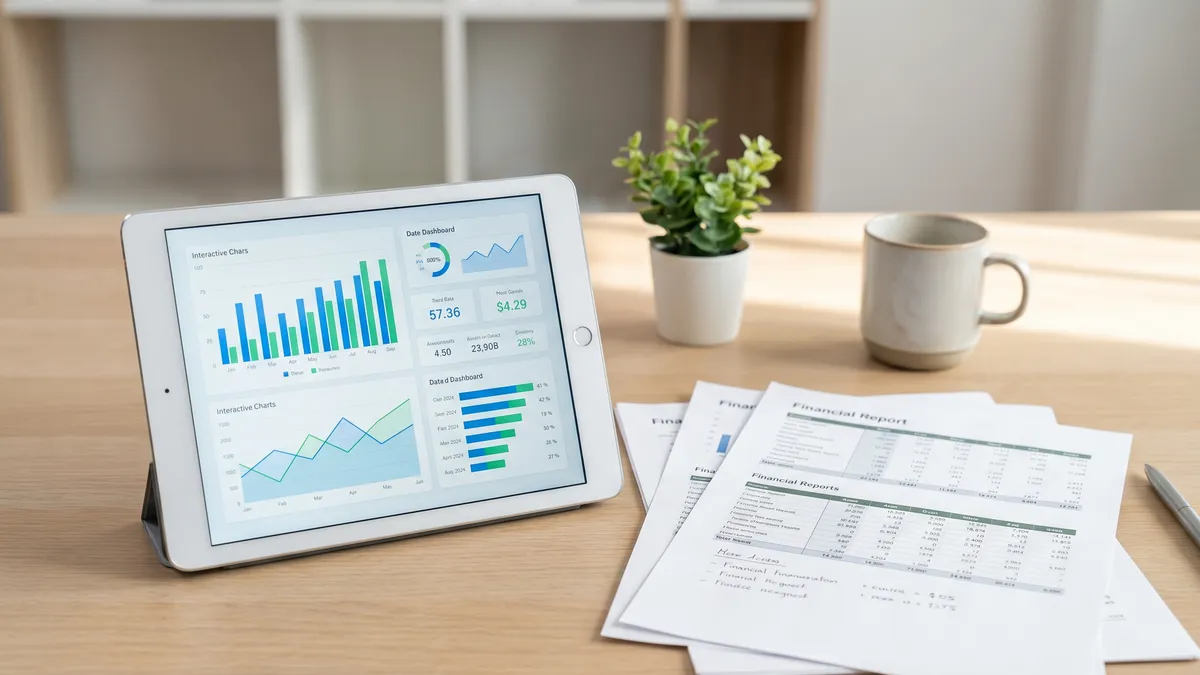
Client Income vs Expenses: How to Read Your Numbers Right
Learn how to analyze income vs expenses to make smarter financial decisions.
Freelancers often look at one number first: total income. A month with ₹2,00,000 in client payments feels successful. But income alone does not tell you whether the month was healthy. You also need to compare it with expenses, pending payments, client concentration, and the pattern across previous months.
Reading your numbers well helps you answer better questions. Can you afford a new laptop? Should you raise rates? Are you too dependent on one client? Is a high-income month actually profitable after software, subcontractors, ads, and taxes?
Start with net profit, not revenue
Revenue is the money clients pay you. Net profit is what remains after expenses. If you earned ₹2,00,000 and spent ₹50,000 on software, contractors, travel, and platform fees, your net profit is ₹1,50,000 before tax.
The basic formula is:
Net profit = client income - business expenses
The next useful metric is net profit margin:
Net profit margin = net profit / client income x 100
If your client income is ₹2,00,000 and your net profit is ₹1,50,000, your margin is 75 percent. That is strong. If another month brings ₹3,00,000 but expenses rise to ₹2,10,000 because you hired contractors for delivery, your margin is only 30 percent. The second month has higher revenue but may create more stress and less usable money.
Watch client concentration
Client concentration shows how much of your income comes from one client. If one client pays ₹1,50,000 out of your total ₹2,00,000, that client represents 75 percent of your income. This is useful while the relationship is healthy, but risky if the project ends suddenly.
High concentration is not always bad. Many freelancers grow through anchor clients. The mistake is not knowing the risk. If one client is more than half of your income, keep a stronger emergency fund and maintain a pipeline of smaller leads. You can also use the steady income to improve your portfolio, ask for referrals, or build retainers with other clients.
Scenario: A designer has three clients. Client A pays ₹80,000, Client B pays ₹30,000, and Client C pays ₹20,000. Total income is ₹1,30,000. Client A is more than 60 percent of revenue. If Client A pauses work, the designer does not lose “some” income; they lose the core of the month.
Calculate monthly burn rate
Burn rate is the amount you need to keep your life and freelance business running each month. It includes personal essentials and fixed business costs. For a freelancer, this may include rent, food, internet, phone, insurance, software subscriptions, loan EMIs, accounting fees, and minimum tax reserve.
Knowing burn rate changes how you interpret income. If your monthly burn is ₹70,000 and your average net profit is ₹1,20,000, you have room to save and invest. If your burn is ₹1,10,000 and your net profit is ₹1,20,000, you have very little margin for slow months.
Burn rate also helps you set a minimum monthly target. Your target should not be “earn more.” It should be clear: cover burn, set aside tax, add emergency savings, and create surplus for goals.
Separate received and pending income
A common freelance mistake is counting pending invoices as spendable money. If you sent an invoice for ₹60,000, that is expected income, not cash. Until it reaches your bank account, it cannot pay rent or tax.
Track income in two states: pending and received. Pending income helps with forecasting. Received income tells you what you can actually allocate. This is especially important when clients have 30-day or 45-day payment cycles.
Scenario: You invoice ₹1,80,000 in April, but only ₹90,000 is received before month-end. If your burn rate is ₹80,000, April is tighter than the invoice total suggests. Without separate tracking, you may overspend because the month looks bigger on paper than it is in cash.
Compare trends, not isolated months
One month rarely tells the full story. Look at three-month and six-month trends. Are expenses rising faster than income? Are pending payments increasing? Is one client becoming more dominant? Are low-income months predictable around holidays or exam seasons?
Trends help you make calm decisions. If revenue dipped once because a client paid late, the business may still be fine. If expenses have climbed for four months while income is flat, you need to review subscriptions, contractor costs, pricing, or project scope.
Use simple monthly categories:
- Total received income
- Pending income
- Business expenses
- Net profit
- Tax set-aside
- Personal transfer
- Emergency savings
Use the numbers to decide, not just report
Numbers are useful only when they change behavior. If net profit margin is falling, check whether you are underpricing or overusing paid tools. If client concentration is high, spend time on business development. If burn rate is too close to profit, reduce fixed costs or build a larger cash buffer.
The point is not to make every month perfect. Freelancing is uneven by nature. The point is to understand what kind of unevenness you are dealing with. When you read income and expenses together, you stop reacting to bank balance surprises and start running your freelance work like a business.
IncomeFlow can help you keep those numbers visible by separating received income, pending payments, expenses, and monthly trends as you update them. Download IncomeFlow from the App Store or Google Play when you are ready to track the next month with less guesswork.